How to Add PUNCH to A SNARE DRUm Without Losing Dynamics
Parallel compression is a mixing secret to help add weight, punch, and consistency to snare drum hits without losing dynamics and ghost notes. In this article, we’ll explain the history, benefits, and reasons for using parallel compression, and how RC SNARE simplifies that process into one knob.
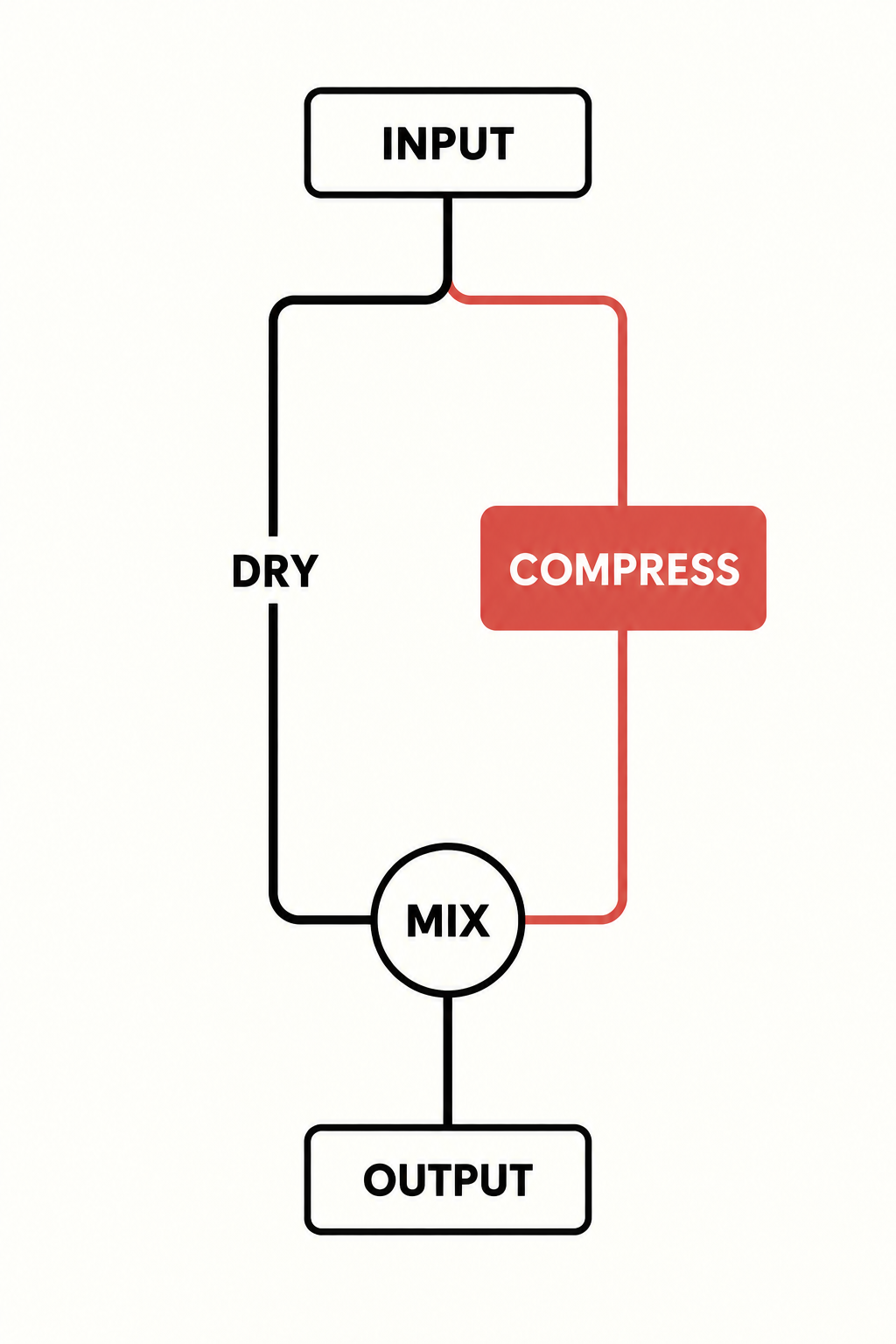
Parallel compression involves duplicating or sending the original uncompressed signal alongside a compressed signal and mixing the two together. This process adds the benefits of compression, such as dynamic consistency, weight, and harmonic flavor, while preserving the dynamics and transients of the original signal. The history of parallel compression is clouded, with no official creator or originator, but there is evidence of parallel compression showing up in early Dolby A noise reduction units. [Some text is obscured by the editing toolbar.] Legendary mastering engineer Bob Katz officially coined the term, and it took off in popularity in the late 1980s and into the 1990s in studios in New York, with engineers such as Bob Clearmountain and Michael Brauer.
Parallel Compression
Parallel compression blends a compressed signal with an uncompressed signal to preserve attack and dynamics.
PUNCH
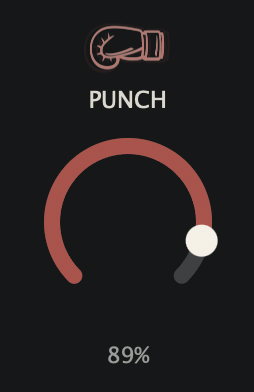
PUNCH is the parallel compressor built into the RC SNARE channel strip plugin.
Parallel compression can be used on any source (vocals, bass, etc.), but it is especially useful on drums when preserving transient energy is important. Applying too much compression to a drum hit can reduce its attack and transient energy. A favorite use case is creating a “drum bus,” where all elements of the drum kit are sent to an aux channel. Heavy compression is then applied and blended back in.
RC SNARE is a channel strip plugin that has six different signal processors in one plugin, with PUNCH serving as the one-knob parallel compression circuit. PUNCH adjusts key elements of the compressor as the knob moves from 0% to 100%: threshold, blend, and harmonics adjust without impacting the dry signal that passes through alongside it.
PUNCH in RC SNARE is designed specifically for processing snare drums. Unlike with generic multi-use compressors, we can do some unique things to tailor the way PUNCH works to suit snares. One downside of using a compressor on a drum is that it can bring up the background noise between drum hits. In the case of a snare drum, a compressor can increase hi-hat or cymbal bleed in the snare mic. To combat this in PUNCH, as the dial is increased, a high-frequency shelf removes high end from the compressed signal without touching the parallel signal, making the drums sound thicker and punchier without destroying high end or accentuating cymbal bleed.
With PUNCH, we wanted to bring in some of the analog mojo that makes compression sought after. As the dial is increased, more harmonic distortion is blended in with the signal. We have both even-order, tube-style harmonics and odd-order, solid-state harmonics that give the compressor a bit of that classic ’80s British console vibe that sounds so good on drums.
Take a listen for yourself and hear how PUNCH in RC SNARE transforms this drum sound. (Use headphones or studio monitors for critical listening)